Solar energy for industries and free trade zones
Industrial solar systems that protect your plant's operational continuity, lower your energy cost per unit produced, and integrate with your existing electrical systems without interrupting operations. Ideal for manufacturing plants, free trade zones, agribusiness, and logistics centers.

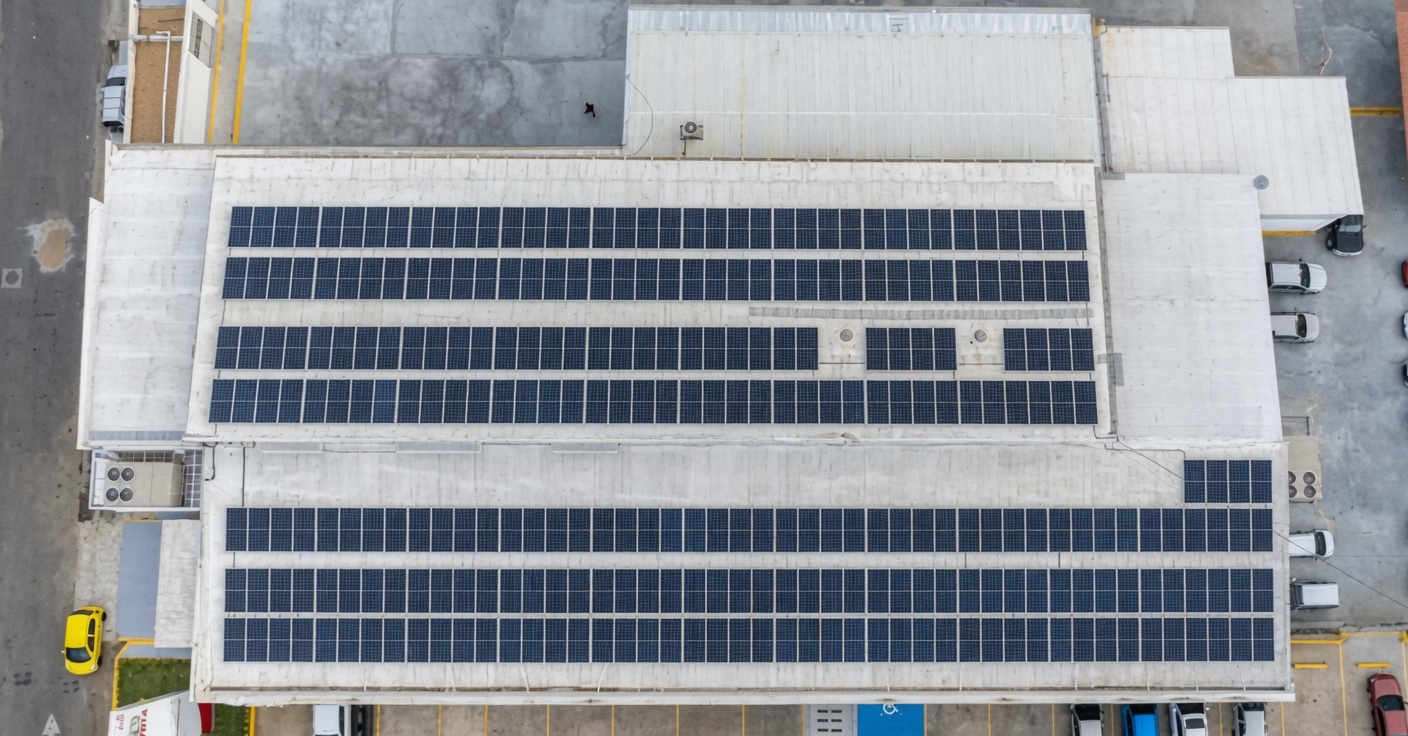
Solar engineering for critical operations
In an industrial plant, a solar system can't be designed in isolation. It has to integrate with the internal grid, the existing equipment, and how the operation actually behaves, without compromising continuity, safety, or power quality.
That's why every project starts with a technical analysis that may include:
- Load and demand profile: we study how, when, and where your plant uses energy so we can size the system correctly.
- Electrical integration: we assess voltage, three-phase configuration, transformers, panels, and the infrastructure's available capacity.
- Power quality: we check variables like power factor, harmonics, and voltage regulation when the project calls for it.
- Protection and selectivity: we coordinate the solar system's protections with those of your existing installation to reduce operational risk.
- Monitoring and integration: we connect solar generation to compatible monitoring platforms or energy management systems.
- Financial optimization: we model the impact on consumption, peak demand, and your company's total energy cost.
The result isn't simply a panel installation. It's a generation system designed to integrate with your operation and deliver savings without adding unnecessary risk.
We work with CFIA-registered professionals and power electrical engineering specialists, matched to the scope and complexity of each project.
Solar solutions for different industrial sectors
Free trade zones and manufacturing
Industrial operations tend to combine high energy consumption, sensitive processes, and increasingly demanding sustainability goals. Solar energy fits this kind of demand well, especially when much of the consumption happens during the day.
Agribusiness
Processes like refrigeration, pumping, packing, drying, and processing tend to concentrate a large share of consumption during solar generation hours. That lets you use the energy you produce directly and buy less electricity from the grid.
Warehouses and logistics centers
Large roof areas and the loads tied to lighting, refrigeration, ventilation, and equipment charging create favorable conditions for solar energy. The system takes advantage of infrastructure you already have and generates energy through much of the operating day.
Process plants
In a process plant, operational continuity comes first. That's why the solar system has to be designed around the base load, the panels, the protections, and the existing electrical infrastructure. The design starts from how the operation actually behaves, so generation adds to it without interfering with critical processes.
Energy backup and demand control
In an industrial operation, a battery isn't installed only to store solar energy. It's designed to solve specific needs around operational continuity and electricity cost management.
- Backup for critical loads. A BESS keeps priority equipment and processes running during grid outages, reducing losses from shutdowns, restarts, or product spoilage.
- Peak demand management. Demand is typically 40-60% of your electricity bill. With a BESS, we cap power peaks and cut the charges tied to demand.
Before recommending storage, we analyze your electricity rate, your consumption peaks, the backup duration you need, and the cost of an operational shutdown.
Regulatory compliance and permits
Industrial projects raise fair questions: how many permits are involved? What happens if the utility doesn't approve the connection? Who coordinates with the industrial park or the distribution company? On larger installations, that uncertainty can stall a decision that already makes financial sense.
The process exists and has clear requirements. The difference is who handles them.
We take care of coordinating:
- Grid interconnection under Law 10086 and Decree 43879-MINAE.
- Design calculations and electrical drawings signed by a CFIA-registered engineer.
- Grid impact study, if applicable.
- Municipal permits depending on the canton.
- Coordination with ARESEP on projects above a certain threshold or involving the sale of surplus energy.
- If you're in a free trade zone: coordination with PROCOMER and the park administrator.
Your company focuses on its operation. We manage the technical and paperwork process from design through interconnection.
Industrial success stories
CEDI
Supermercado BM
Bodega Logística
Technical evaluation and proposal
First we assess your company and its consumption. Once you share your electricity bills from the last 3 months, we determine initial feasibility and then schedule a site visit.
Within an estimated 10 to 15 business days after we've gathered the necessary information, we deliver:
- A preliminary system design, including proposed capacity, configuration, and layout.
- A projection of generation, savings, and cash flow over the system's useful life.
- A detailed breakdown of the investment.
- The project's financial indicators, such as payback period, IRR, and NPV.
- An estimated schedule for installation, interconnection, and permits.
- Financing options suited to your company's profile.
Put the sun to work for your plant
You don't just get a price. You get the technical and financial information you need to evaluate the project with clarity.
Message us directly: WhatsApp +506 8388 8818